Summary


Every November in the United States, gratitude has its moment with the celebration of Thanksgiving with family and friends. Once the delicious leftovers and associated experiences are gone, feelings of gratitude can fade for many of us.
Drawing on Brown’s emphasis on vulnerability, I’ll share that I practice gratitude every day. The focus is on people I’m grateful for and their continued well-being. My daily commitment has helped me through the years during good times and more challenging ones. For me, it only takes a few minutes throughout the day and summarized at night before going to sleep.
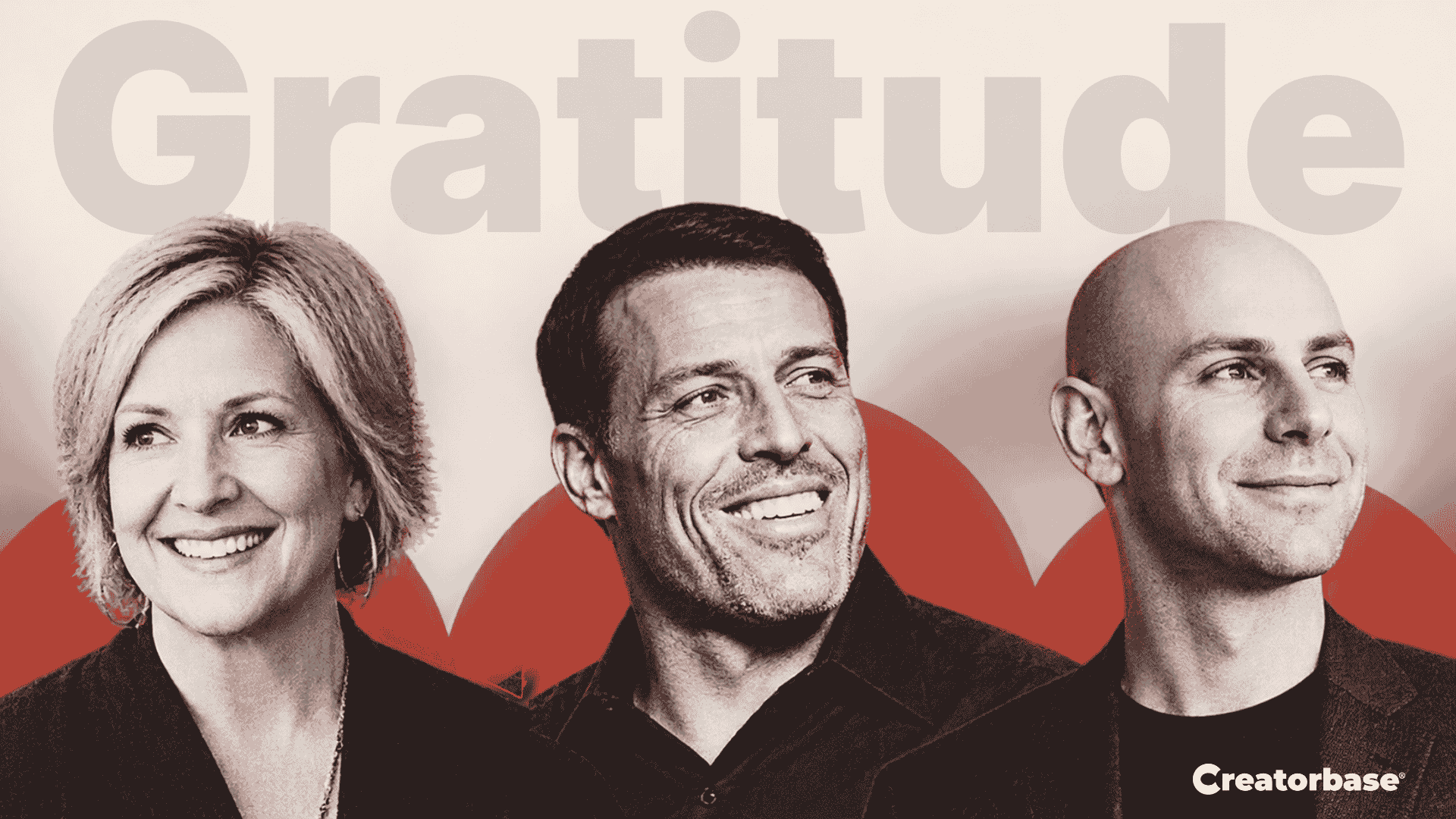
Three of today's best-known experts and global voices on human potential, researcher Brené Brown, coach Tony Robbins and organizational psychologist Adam Grant, believe gratitude works best when it's something you do every day. I decided to combine some of their ideas for this story, and Creatorbase® members are discussing this point of view inside our community.
Why daily actions matter
Brown came to this through data. After several years of research, she told Oprah Winfrey she had never interviewed anyone able to soften into joy who didn't actively practice gratitude. She describes it as a practice you do, not simply the "attitude of gratitude" many people imagine.
Robbins ties gratitude to emotional state. "You can't be fearful and grateful simultaneously," he says. Grant adds a caution: gratitude journaling on its own can leave you passive, because you're only reflecting on what you've received, not what you’re giving to others.
Five actions for a gratitude-powered day
- Treat it as a practice, not a mood. Brown's research points to action. Robbins models it with a daily routine split into three three-minute segments. Pick a time and protect it.
- Feel it, don't just list it. Robbins says he steps into grateful moments and feels the gratitude and aliveness. He starts small: the wind in his face or a child's smile. Brown's gratitude work, per a summary of her Gratitude Podcast interview, also touches on moving from scarcity toward "enoughness." Ordinary moments count.
- Write three and three. Grant keeps a journal with three things he's grateful for and three ways he was useful to others. His research with Jane Dutton found that fundraisers who wrote about giving increased their hourly calls by more than 29 percent over the next two weeks.
- Use gratitude to reduce fear. Brown describes how, when we lose our tolerance for vulnerability, joy can become foreboding, as if we're rehearsing tragedy. Robbins' answer is the same move: when fear or anger shows up, train your nervous system to go into gratitude more naturally. Name what you're thankful for in the moment.
- Give it away. Robbins ends his daily routine with a three-minute blessing and prayer for his own health and the people in his life. Grant's research found that thinking about what we've given, rather than received, may make us more helpful to others. Extend active support, then note at least one way you helped someone today.
You don't need a holiday or a complicated ritual. Name one ordinary moment, feel it for a minute, and write down one way you were useful to someone. Do it again tomorrow, the next day, and so on.
Help us help you and others
What’s your gratitude practice daily, weekly, or whenever it’s the right time for you? Join the conversation about this topic (with linked sources) inside Creatorbase:
- Apply to join Creatorbase member-only discussions and Co-cre8 projects.
- Subscribe to the Creatorbase Brief™ weekly newsletter for member insights and updates.
- Share on LinkedIn with #Creatorbase and #Gratitude hashtags.


